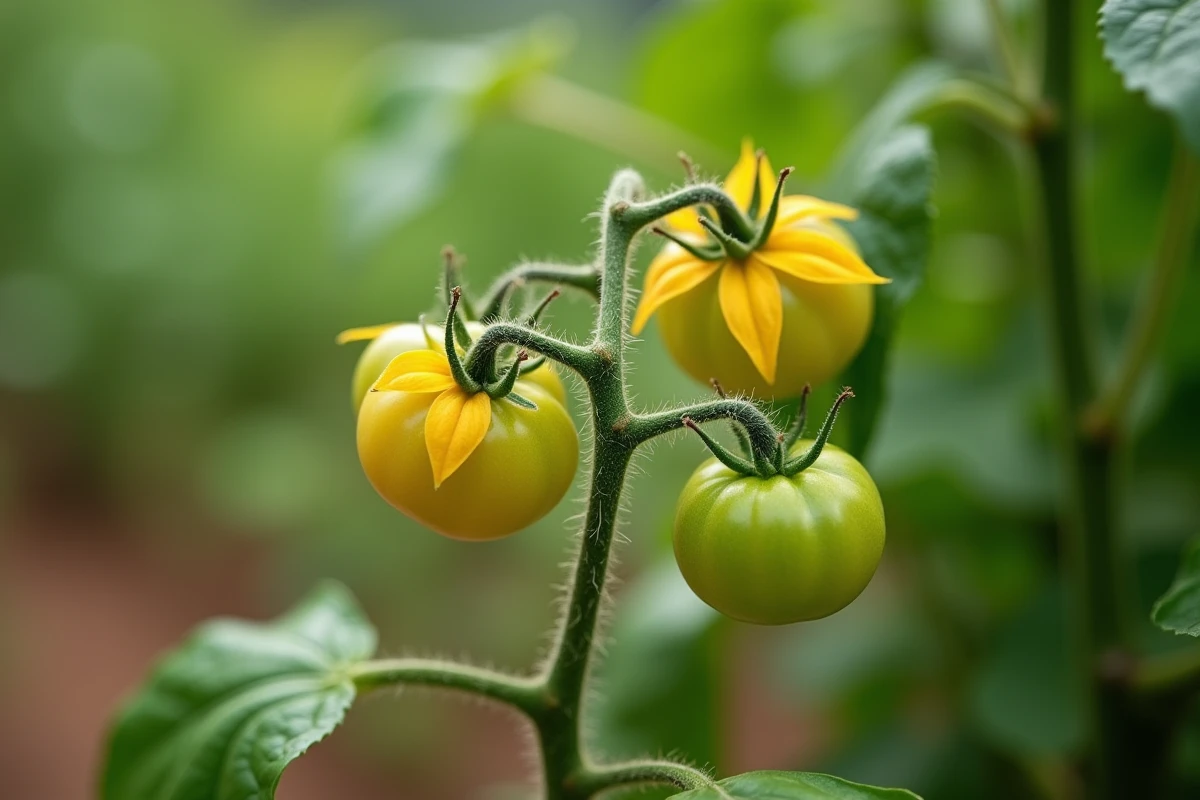
When transplanting a tomato plant at the end of May and the first flowers drop without producing fruit, the question of timing quickly arises. Between germination and harvest, each stage of the cycle depends on specific conditions, and the durations indicated on seed packets only tell part of the story.
Fruit Set and Night Temperatures: The Bottleneck of the Cycle
On the ground, the most fragile phase of the cycle is not sowing or vegetative growth. It is the fruit set, the moment when the fertilized flower begins to form a fruit. When entire clusters of flowers dry up and fall in the middle of summer, the cause is often thermal.
Feedback from producers and observations from experimental stations converge: fruit set drops when nights remain above 21-22 °C for several consecutive days. The flower opens, pollen is released, but fertilization fails. This phenomenon, amplified by recent heatwaves, significantly extends the time between flowering and the first harvest.
To fully understand the life cycle and flowering of tomatoes, one must consider this climatic variable that traditional growing calendars often ignore. A plant can flower abundantly and produce nothing for two to three weeks if the nights do not cool down.
In practice, the problem can be mitigated by watering the soil at the end of the day to lower the temperature at the root level, or by shading the plants during the hottest hours. But no pruning or fertilizer can compensate for nights that are too warm.
Determinate or Indeterminate Varieties: Two Very Different Flowering Rhythms
The tomato cycle is often discussed as a single sequence. In reality, the varietal type radically changes the structure of flowering and thus the harvest schedule.
Grouped Flowering of Determinate Varieties
Determinate varieties (like Roma, industrial tomatoes) stop growing after a defined number of flower clusters. Their flowering is concentrated over a few weeks. This results in a grouped harvest, convenient for making preserves or sauces.
The downside: once the fruits are harvested, the plant declines. The production window is short.
Staggered Flowering of Indeterminate Varieties
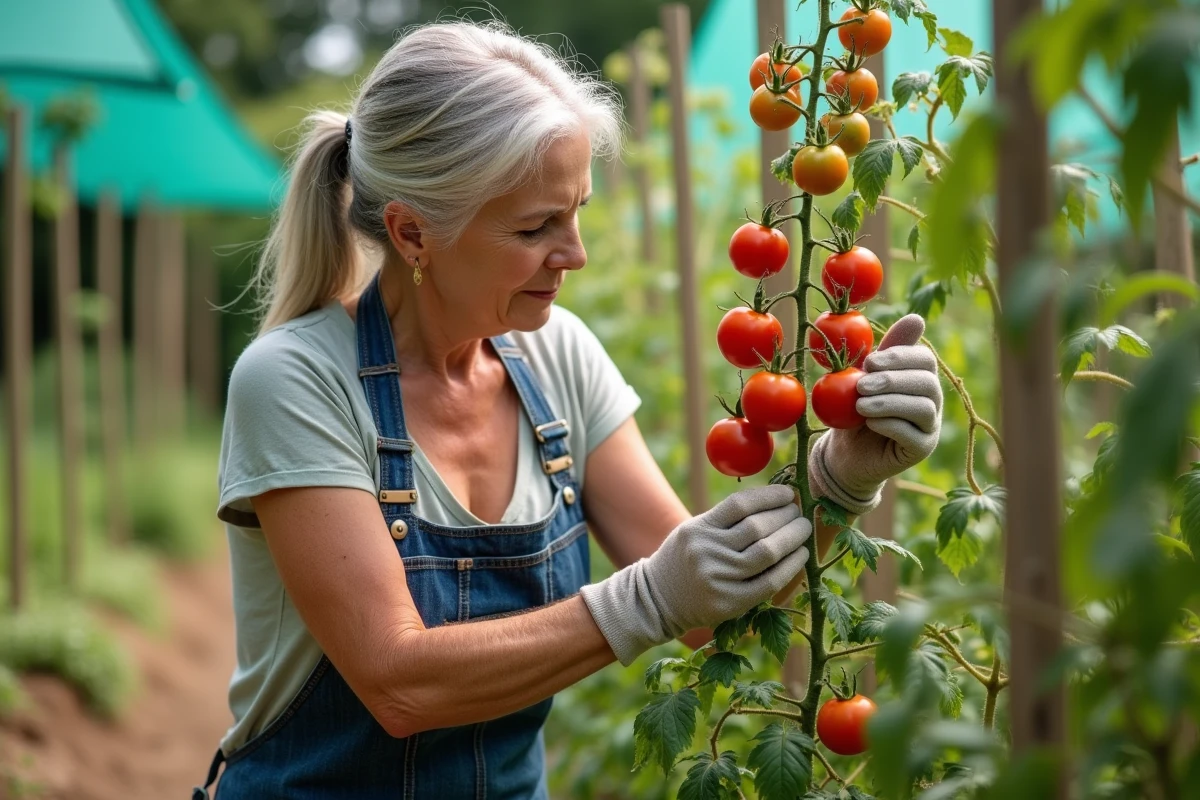
Indeterminate varieties (Beefsteak, cherry, most garden tomatoes) continue to grow and flower as long as conditions allow. The harvest extends over several months, from July until the first frosts in many regions.
This growth pattern requires sturdy staking and regular pruning of suckers to channel energy toward the developing fruits rather than the vegetation.
- Determinate variety: concentrated flowering, grouped harvest, compact plant that does not necessarily require tall staking
- Indeterminate variety: continuous flowering, staggered harvest, regular pruning and staking to maintain productivity
- Semi-determinate varieties: intermediate behavior, flowering on a few additional clusters before growth stops
When choosing plants, this distinction weighs as much as the flavor of the fruit on the organization of the season in the vegetable garden.
From Sowing to Harvest: Actual Durations by Cultivation Stage
The total cycle of the tomato spans from four to seven and a half months depending on the varieties and conditions. Here is the concrete breakdown, as can be observed under standard growing conditions.
Germination typically takes about a week when the substrate temperature is sufficient. Below 15 °C at soil level, germination slows significantly, sometimes doubling in duration.
The nursery phase (from sowing to transplanting) lasts four to six weeks. This is when the plant develops its first true leaves and a root system capable of supporting transplantation.
After transplanting into the ground or final pot, the first flowers appear between three and six weeks later. Fruit set follows about a week after the flowers open, if pollination has been successful.
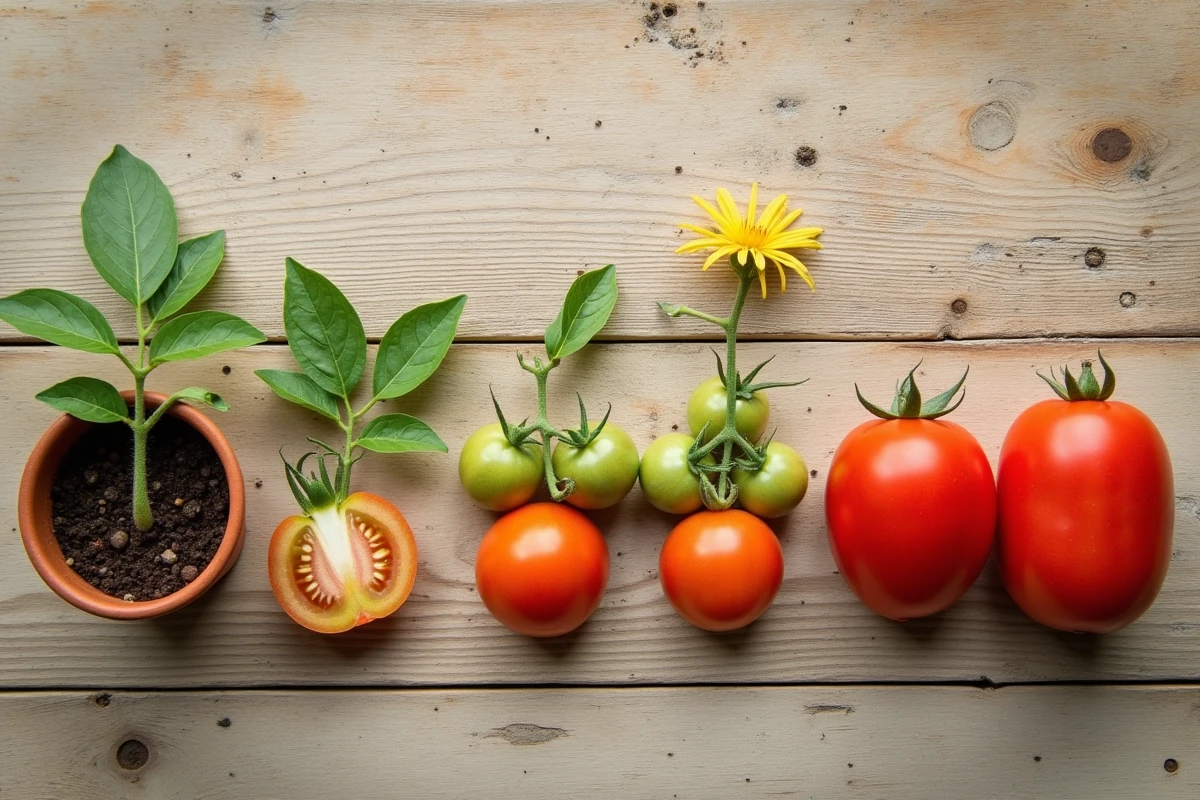
When ripening conditions are favorable, fruits are harvested about a month after fruit set, which is three to four months after sowing for the earliest varieties. The duration of the harvest itself varies considerably: from less than a month for a determinate variety to more than two months for a well-managed indeterminate variety.
- Sowing to germination: about a week
- Germination to transplanting: four to six weeks in the nursery
- Transplanting to first flowers: three to six weeks
- Flowers to fruit set: about a week
- Fruit set to harvest: about a month under favorable conditions
Plant Management and Density: Speeding Up or Slowing Down the Cycle
You can have two plants of the same variety, sown on the same day, and harvest them several weeks apart. The difference comes from the management.
A plant left unpruned, without suckering, invests its energy in producing new stems and leaves at the expense of fruits. Ripening slows because the plant distributes its resources. Conversely, a plant pruned to one or two stems concentrates its sap toward the existing clusters, which accelerates ripening.
Plant density also plays a role. Plants that are too close shade each other, reducing photosynthesis and delaying ripening. Feedback on this point varies by region and soil type, but a spacing of at least 50 centimeters between plants remains a reliable working basis for most garden varieties.
Regular watering without excess, well-drained soil, and the addition of mature compost at transplanting complete the setup. None of these actions change the genetic cycle of the variety, but they allow the plant to express its potential without hindrance.
The tomato cycle is not a fixed clock. Between varietal choice, plant management, and climatic uncertainties, the actual duration from sowing to harvest can vary from one to two times. It is better to observe your plants each week than to rely solely on the dates printed on the seed packet.