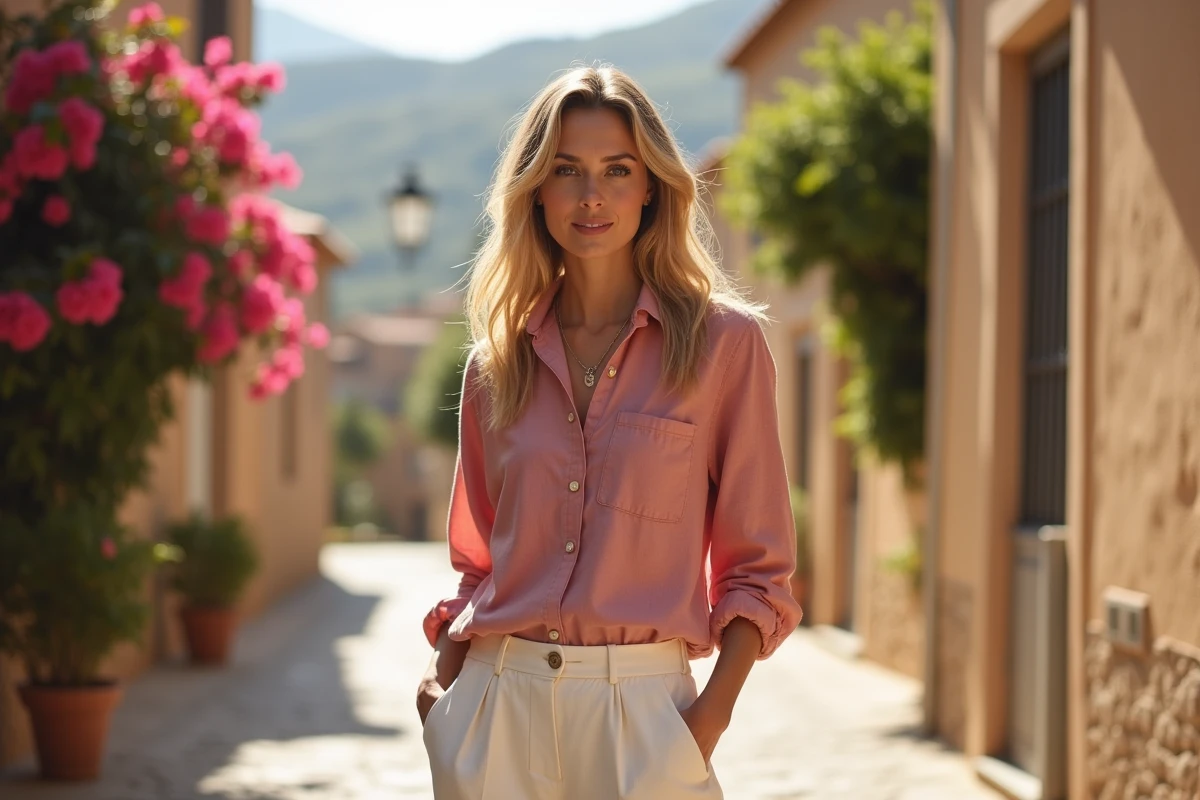
In April, Sicily oscillates between bright days close to summer heat and cool mornings where the sea breeze reminds us that spring is not over. This thermal amplitude, accentuated by increasingly frequent sirocco episodes since the early 2010s, makes the choice of clothing less intuitive than it seems. The Sicilian climate in April requires a layered and material-based approach, not a trendy piece approach.
Thermal amplitude in Sicily: understanding April before packing
The coast between Palermo and Catania enjoys generous sunshine from the morning, but temperatures remain moderate until midday. In the afternoon, the mercury can rise significantly above seasonal norms during sirocco waves, a warm wind from the Sahara.
What complicates matters: the gap between the coast and the altitude is considerable. On the slopes of Etna or in the heights of the Madonie, snow sometimes lingers in April. A hike to the summit craters of Etna feels completely different compared to a visit to Taormina by the sea.
Spring 2024 has also been marked by several episodes of heavy rain in eastern Sicily, particularly around Catania and Syracuse, with orange-level weather alerts issued by the Protezione Civile. Even with mild temperatures, a thunderstorm in April is not a marginal risk.
To refine the choice of the Sicilian outfit to prioritize in April, this climatic reality should guide every piece you pack in your suitcase.
Three-layer system for hiking on Etna and the Aeolian Islands
Hiking guides and local agencies specializing in Etna and the Aeolian Islands recommend a true three-layer system in April, not just a simple improvised layering. The principle is based on a precise technical logic.
- The first layer (base layer): a breathable t-shirt, made of synthetic material or merino wool, that wicks away sweat during the effort of climbing towards the craters.
- The second layer (insulation): a thin fleece or a lightweight compressible down jacket, capable of retaining body heat at the summit where the wind blows strongly.
- The third layer (protection): a waterproof windbreaker, compact and easy to store in a backpack, to face sudden showers or gusts at altitude.
This system works because it allows you to add or remove a layer in seconds. At the foot of the volcano, the second layer stays in the bag. Near the summit craters, all three layers are often necessary, even when the sun is shining below.
Cotton should be avoided at altitude. Wet from sweat or a shower, it dries slowly and cools the body. Linen, excellent in the city, has no place on the trails of Etna.
Closed shoes: a non-negotiable choice for hiking
The volcanic terrain of Etna consists of solidified lava, abrasive and unstable in places. Hiking boots, with a treaded sole and a shaft that protects the ankle, are the only reasonable option. City sneakers slip on the scoria.
Even outside of Etna, Sicilian archaeological sites (Agrigento, Selinunte) feature uneven ground where closed shoes are preferable to sandals.
City outfit in Sicily: linen, cotton, and dress code for religious sites
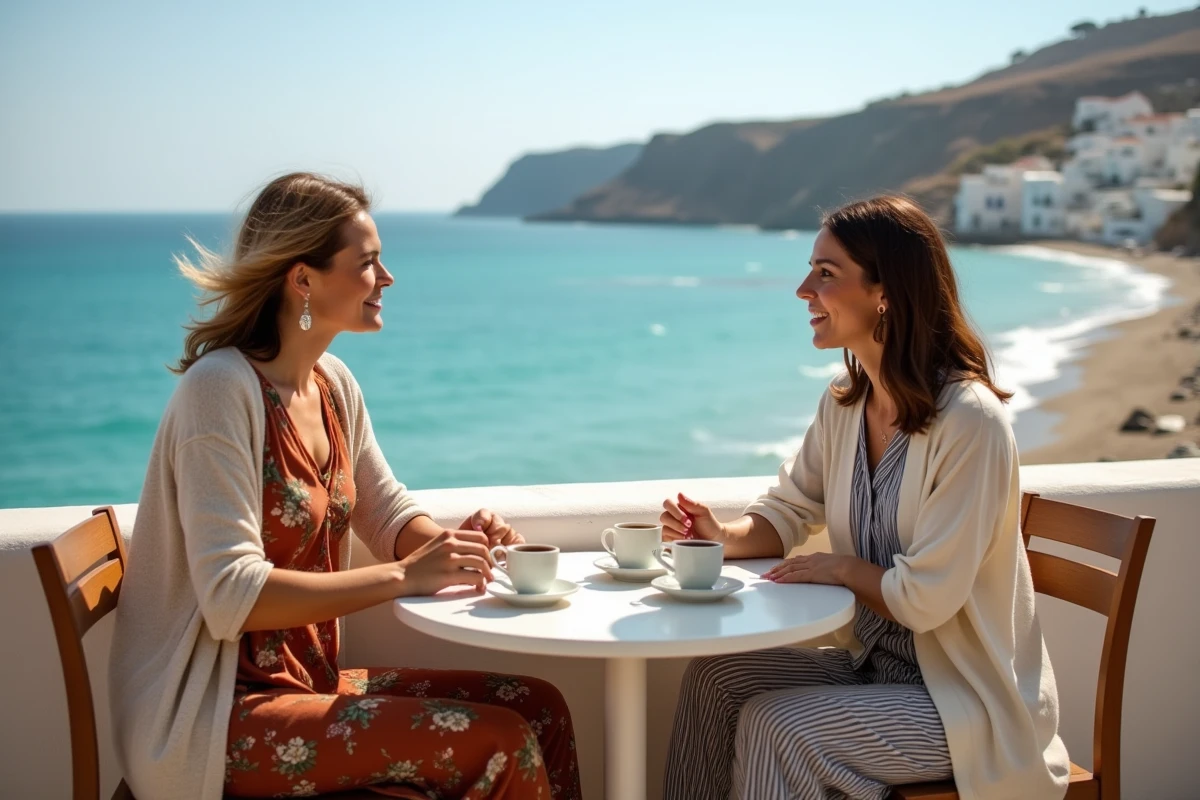
By the sea, in Palermo, Catania, or Taormina, April days allow for lightweight clothing starting from midday. Linen and light cotton are the reigning materials in the city, as they breathe under the Sicilian sun while remaining comfortable when the sea breeze picks up.
A pair of linen pants, a long-sleeved roll-up shirt, and a pair of closed soft leather shoes form a versatile base. Long sleeves are not a whim: they protect from the sun during the day and cover the shoulders for entering churches and cathedrals.
Dress code in Sicilian places of worship
The cathedral of Palermo, like most religious buildings in Sicily, requires that shoulders and knees be covered. CoopCulture, which manages many Italian cultural sites, reminds visitors of this rule on its pages dedicated to the sites of Agrigento and Palermo.
Bringing a light scarf or shawl in your bag allows you to cover your shoulders at the entrance of a church without having to wear a warm garment all day. A cotton scarf also serves as protection against the sun during outdoor visits.
Hat, sunglasses, and sun protection: accessories that a trip to Sicily demands
UV radiation in Sicily in April is already significant, especially between noon and four o’clock. A hat with a sufficiently wide brim protects the face and neck, whether visiting the Valley of the Temples in Agrigento or the cobbled streets of Cefalù.
- A soft, foldable hat that fits into a bag without losing its shape.
- Sunglasses with an appropriate protection index, particularly useful at altitude on Etna where glare adds to direct radiation.
- A lightweight day backpack to carry the extra layer, scarf, sunscreen, and a water bottle.
These accessories are not secondary. In April, the Sicilian sun deceives with its apparent mildness, but cumulative exposure during a day of visiting can cause sunburn from the earliest hours.
Compact rain layer: the reflex not to forget
Even when forecasts predict good weather, a lightweight, compressible waterproof jacket remains the safety net for travelers in Sicily in spring. April storms arrive quickly, particularly on the east coast between Catania and Syracuse, and dissipate in less than an hour. Having a folded protection at the bottom of the bag avoids the need to seek shelter in a hurry.
Ultimately, the choice of a wardrobe for Sicily in April boils down to a logic of adaptation: linen and cotton in the city, a three-layer system at altitude, sun protection everywhere, and a rain layer always accessible. The most useful pieces are not the most numerous, but those that cover the most situations with the least volume in the suitcase.