Success in a dish doesn’t always depend on the recipe itself. The difference between a decent meal and a memorable one often lies in precise technical gestures, targeted ingredient choices, and the ability to correct mistakes before they become evident on the plate. What parameters truly separate a successful dish from a failed one, and how can they be measured to improve in the kitchen?
Kitchen Recovery Protocols: Saving a Dish Before Service
Cooking workshops and culinary schools now teach recovery techniques as a skill in its own right. The idea is simple: knowing how to correct a mistake during cooking changes the final result more than the initial recipe.
See also : Find Your Future Home: Tips and Tricks to Succeed in Your Real Estate Project
A sauce that has split, an overcooked cake, meat that is too salty: each incident has a protocol. These corrections allow amateur cooks to serve a convincing dish even when the preparation has gone awry, which is precisely the definition of a successful meal in the eyes of the diners.
| Common Problem | Probable Cause | Quick Fix |
|---|---|---|
| Split sauce (beurre blanc, béarnaise) | Temperature too high | Remove from heat, add a spoonful of cold water while whisking |
| Dish too salty | Cumulative seasoning (stock + salt) | Add a fat (cream, butter) or a starch (cut potatoes) |
| Dry meat after cooking | Overcooking or insufficient resting | Slice thinly and coat with a reduced cooking juice mixed with a knob of butter |
| Overcooked cake on the surface | Oven too hot or high position | Cut off the burnt crust, soak with a light syrup |
| Too soft vegetables | Prolonged cooking in water | Puree or turn into a velouté instead of serving as a side |
The common thread of these corrections: they rely on adding a fat or liquid to mask the defect. By following the advice from Conseils Cuisine, this logic can be found applied to many everyday recipes.
Further reading : Discover the best tips for cultivating your well-being every day
Seasoning and Cooking: Two Variables That Change Everything in Your Dishes
Most bland dishes are not lacking in spices. They lack salt, added at the right moment. Salting at the beginning of cooking allows the ingredients to gradually absorb the salt, whereas adding it at the end of preparation remains on the surface and gives a raw taste.
Sugar plays a comparable role in savory dishes. A pinch in a tomato sauce does not sweeten the dish: it balances the acidity. This principle of balance between salt, acid, fat, and sugar is the foundation of professional seasoning.
Deglazing the Pan After Each Cooking
The cooking juices stuck to the bottom of a pan after searing meat or vegetables contain a concentration of flavors. Dissolving them with a bit of wine, broth, or even water forms the basis of an express sauce. Systematically deglazing transforms a simple dish into a chef’s dish.
To achieve a shiny sauce like in a restaurant, simply incorporate a knob of cold butter at the end of the reduction, off the heat, while stirring vigorously. This technique is called mounting with butter. It adds texture and shine without altering the taste of the dish.
Mastering Oven Temperature
An oven that is too hot produces burnt crusts and raw interiors. An oven that is too cool results in pale, textureless dishes. Here are some useful guidelines:
- Roasted vegetables gain caramelization at high temperatures, with a drizzle of oil applied directly to each piece rather than in the bottom of the dish
- Roasting meats benefit from starting at a high temperature to sear the surface, followed by a reduction to finish cooking gently
- Baking requires a stable temperature and real preheating (wait at least ten minutes after the oven reaches the target temperature)
Presentation and Plating: What Diners See Before Tasting
In recent years, the most impressive recipes are no longer sophisticated desserts. Sharing dishes plated in the center of the table have taken over, deemed more convivial and less intimidating by diners. Appetizer-dinner boards, cast iron pots placed directly on a trivet, large earthenware dishes: the format changes the perception of the meal.
The sensory factor also plays a role measured by several well-known chefs: dishes that create sounds (crunching, flambéing, opening a steaming pot) and strong aromas upon arrival in the dining room are perceived as more successful. Taste matters, but the experience begins with noise and smell.
Color and Contrast on the Plate
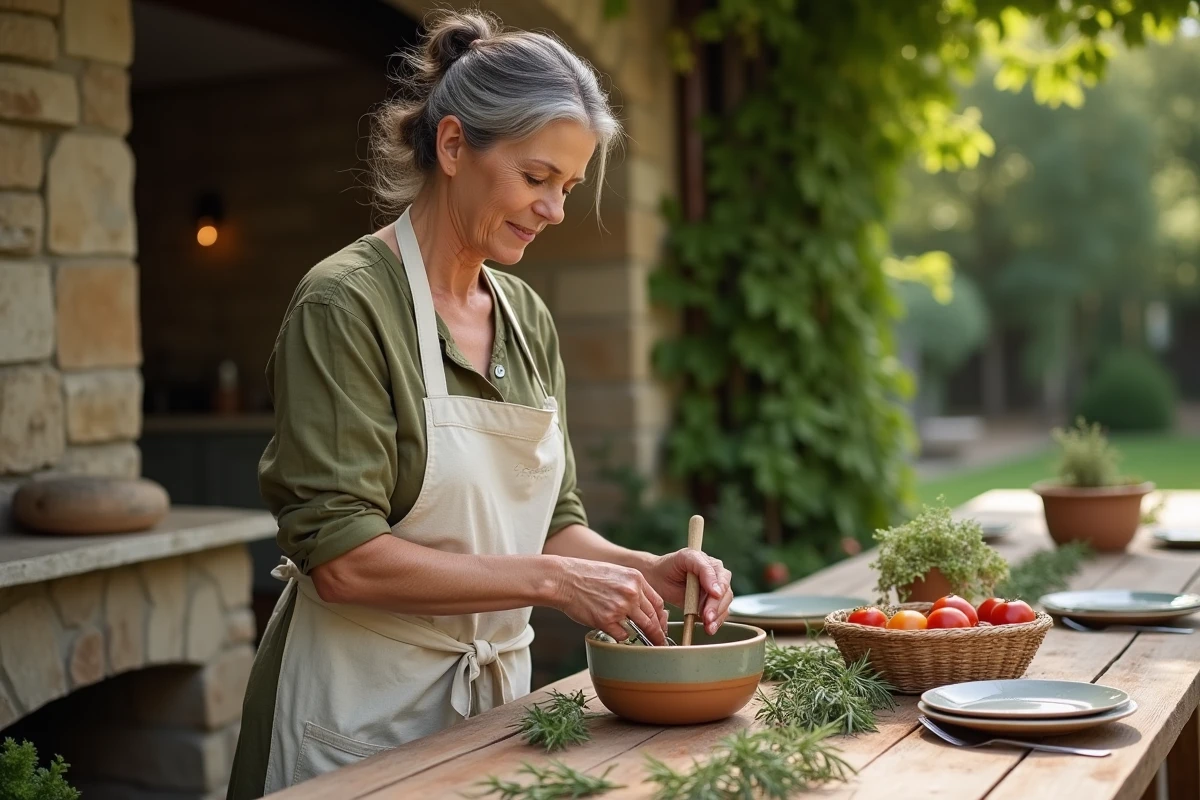
A monochromatic dish appears bland even before being tasted. Adding a contrasting color element is enough to change the perception: finely chopped fresh herbs, citrus zest, roasted seeds, a drizzle of colored oil. These elements also add texture, enhancing the sensation of a well-crafted dish.
The choice of container is as important as the content. A wide white plate highlights a colorful dish. In contrast, a rustic cast iron or raw ceramic dish is better suited for sharing recipes and long cooking.
Online Cooking Classes: Progressing Sustainably Rather Than Collecting Tips
French amateur cooks are increasingly turning to structured online courses (MOOCs, virtual workshops, thematic pathways) rather than isolated tips. According to an OpinionWay survey for the Paul Bocuse Institute published in November 2023, these formats are considered more effective for long-term progress, particularly through pathways focused on the fundamentals of French cuisine or festive menus.
A structured pathway corrects habits, not just recipes. A course on mother sauces teaches five to six preparations, but more importantly, a reasoning applicable to dozens of dishes. It is this transversal logic that makes the difference between following a recipe and knowing how to cook.
- The “French Cuisine Basics” pathways cover fundamental techniques (vegetable cuts, stocks, bindings) applicable to the majority of recipes
- Thematic workshops (Christmas menu, Japanese dinner, plant-based cooking) allow for the preparation of a complete meal with a guiding thread
- Virtual formats offer real-time feedback on techniques, which a pre-recorded video cannot provide
The ability to succeed in all dishes does not rely on a broader repertoire of recipes. It depends on mastering a few fundamental gestures (seasoning, deglazing, controlling temperature, correcting a mistake) and understanding the link between ingredients, cooking, and presentation. These gestures can be counted on one hand, but they change every meal.