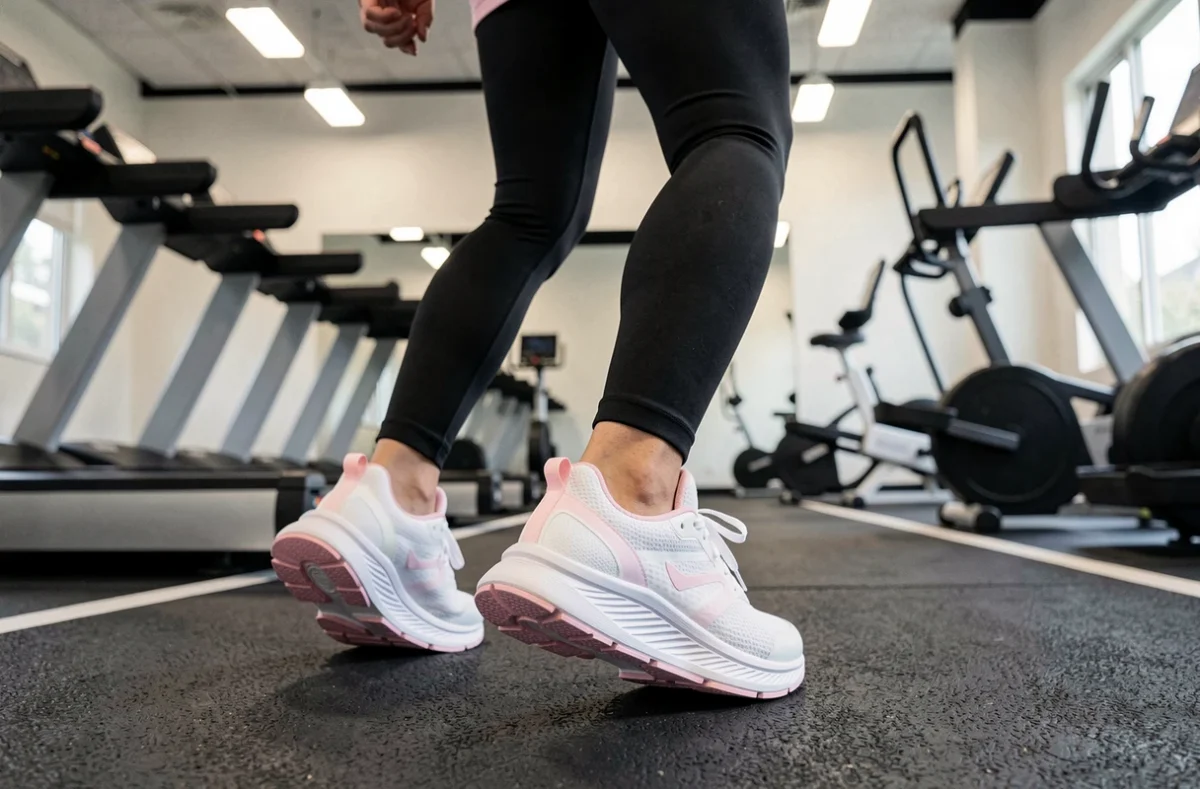
Comparing women’s fitness shoes with cushioning should clarify what we measure: the responsiveness of the sole, lateral stability, weight, and the dominant discipline (HIIT, strength training, treadmill cardio). A highly cushioned model for running does not react the same way as a cross-training shoe during a squat or lateral movement. This ranking orders ten models according to their ability to combine impact comfort and foot support during varied sessions.
1. Nike Free Metcon 7 – fitness versatility and responsive cushioning
The Free Metcon 7 combines a flexible forefoot sole inherited from the Free range with a firmer heel from the Metcon lineage. This compromise produces a responsive cushioning without float under load, setting it apart from running shoes repurposed for the gym.
On HIIT circuits including box jumps and short sprints, the forefoot absorbs impacts without compromising ground response. In contrast, during a heavy deadlift, the heel remains stiff enough not to compress. To explore our selection of women’s fitness shoes, this model represents the broadest balance between disciplines.
2. HOKA Bondi 9 – maximum cushioning for prolonged cardio
The Bondi 9 offers one of the most generous foam volumes on the market. For sessions dominated by the treadmill, elliptical, or stepper, this thickness significantly reduces foot fatigue during long efforts.
The trade-off is real: very soft cushioning reduces the feeling of stability during lateral movements or lunges. A review cited by GQ in October 2026 reports that maximal cushioning shoes could increase certain joint stresses, particularly at the anterior cruciate ligament. The Bondi 9 excels in linear cardio but is less suitable for mixed training with weights.
3. Nike Metcon 10 – stability and muscle strengthening
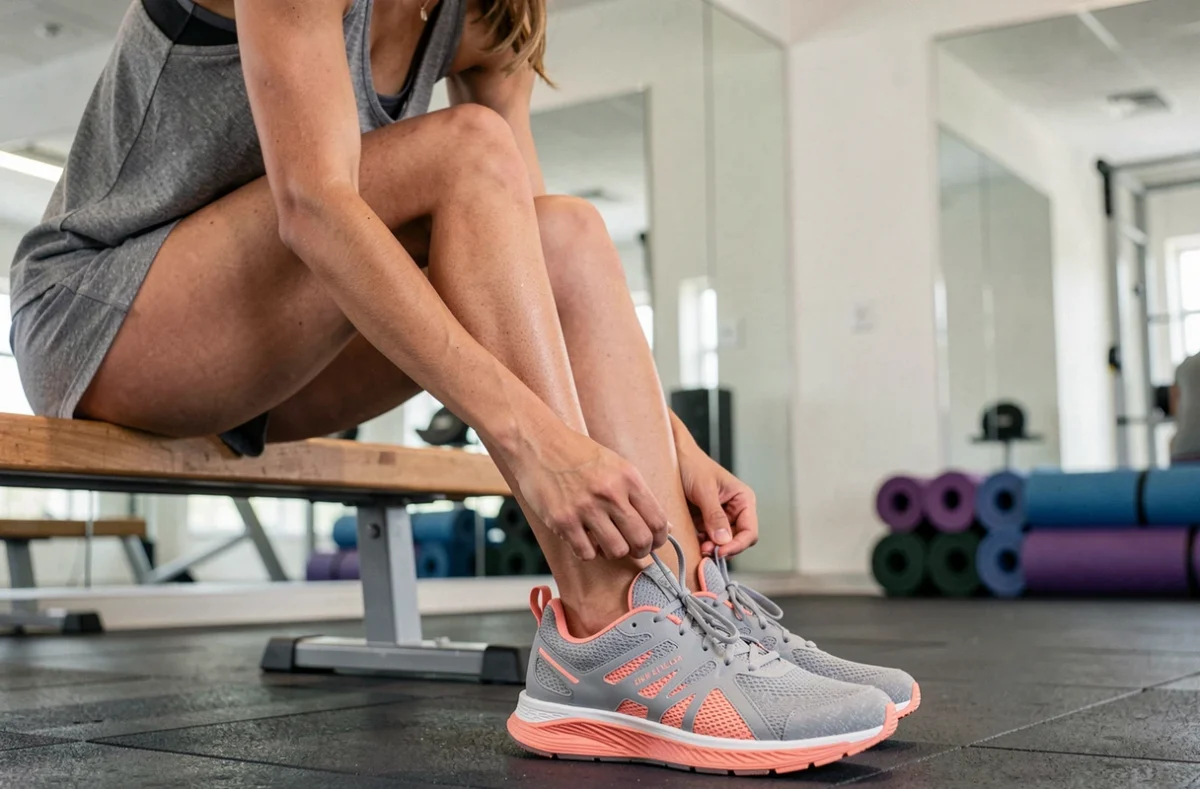
The Metcon 10 prioritizes stability over softness. Its flat and dense heel allows for force transmission to the ground without energy loss during squats, presses, and deadlifts.
The forefoot cushioning is present but contained, just enough to absorb a few jumps between sets. This model targets strength-dominant sessions, not pure cardio. For practitioners who split their time between dumbbells and machines, the Metcon 10 offers a reliable base, provided they accept less comfort during repeated impacts.
4. Reebok Nano X5 – cross-training and durability
The Nano X5 remains a reference in the cross-training world. Its reinforced upper withstands rope climbs and lateral abrasion movements, where many competitors wear out quickly.
The cushioning is in an intermediate zone: neither as soft as the Bondi 9 nor as rigid as the Metcon 10. This positioning makes it a compromise pair for practitioners who alternate WODs, strength training, and short running segments without wanting to change shoes.
5. Nike Vomero 18 – premium comfort for the treadmill
Originally designed for long-distance running, the Vomero 18 features generous ZoomX foam that absorbs vertical shocks very well. On the treadmill, comfort is immediate and lasting.
Its suitable use remains vertical impact cardio: running, brisk walking, stepper. As soon as the session includes lateral movements or lifting, the thick sole becomes a hindrance by reducing proprioception. A pair to reserve for dedicated cardio days.
6. On Cloudtilt – everyday comfort and light sessions
The Cloudtilt focuses on overall comfort rather than pure athletic performance. Its CloudTec sole softly absorbs impacts, suitable for guided machines, stationary bikes, and brisk walking.
For intense HIIT or heavy loads, the lack of stiffness in the heel limits its appeal. It remains relevant for practitioners whose sessions are moderate in intensity or who seek a versatile pair between the gym and daily commutes.
7. Adidas Adizero EVO SL – lightness and dynamism
The Adizero EVO SL stands out for its lightweight design and responsive sole that promotes short accelerations. In circuit training formats with sprints, burpees, and jumps, the lightness reduces foot muscle fatigue during long sessions.
However, lateral support is less pronounced than on a Nano X5 or a Metcon. This model is suitable for dynamic cardio sessions where speed of movement takes precedence over stability under load.
8. Nike Pegasus 42 – running and gym versatility
The Pegasus remains one of the best-selling running shoes, and many practitioners also use it in the gym. Its balanced cushioning works well on treadmills, ellipticals, and moderate cardio circuits.
The limit appears during strength exercises: the sole, designed for linear strides, does not lock the foot enough during multidirectional movements. Good option for a cardio-dominant practitioner who occasionally uses machines.
9. Under Armour TriBase Reign 6 – grip and ground contact
The TriBase Reign 6 adopts a different philosophy: bringing the foot closer to the ground. The thin, flat sole increases proprioception, benefiting squats, lunges, and balance exercises.
The cushioning is intentionally reduced. For practitioners who primarily seek good ground contact and maximum stability during strength training, this model precisely meets the need. Cardio sessions with repeated jumps will be less comfortable than with a Vomero or a Bondi.
10. Puma Fuse 3.0 – value for money in cross-training
The Fuse 3.0 offers decent cushioning and a flat sole suitable for cross-training at a price lower than most of the competitors mentioned above. The mesh upper ensures satisfactory ventilation without sacrificing support.
This model does not surpass any competitor on a single criterion, but covers the needs of mixed training without any deal-breaking weaknesses. For a first pair of fitness shoes or a controlled budget, the Fuse 3.0 gets the job done.
The choice between these ten models depends on the actual distribution of sessions. A practitioner who primarily does cardio on a treadmill does not have the same biomechanical constraints as a cross-training or heavy lifting enthusiast. Maximum cushioning protects joints during vertical impacts, but excess foam compromises lateral stability and force transmission. Identifying one’s dominant discipline remains the most reliable criterion before choosing.