
When updating a showcase site or launching a campaign, one quickly faces a concrete problem: the tools that worked eighteen months ago no longer meet the same needs. Search engines are changing how they present results, accessibility rules are tightening, and acquisition channels are fragmenting. Here are the digital trends and web tools that are truly changing the daily lives of teams in 2026.
Digital Accessibility: A Regulatory Constraint Redesigning Web Interfaces
Since June 28, 2025, the European Accessibility Act applies in the EU member states. The directive covers certain websites, applications, e-commerce services, and digital services aimed at consumers. In practice, this means that an e-commerce operator or content publisher may need to redesign interfaces to meet legal accessibility requirements.
The paradox is that visually richer interfaces sometimes exacerbate accessibility flaws. We pile on animations, carousels, decorative typography, and forget that contrast, keyboard navigation, or compatibility with screen readers are not optional. Development teams that treat accessibility as a separate project from design are falling behind.
Several tools today allow for continuous compliance testing: audit modules integrated into CMS, browser extensions that simulate different visual impairments, or automatic contrast validators. The stakes are not just legal. An accessible site improves the experience for all users, including on mobile with a slow connection. Resources like webunited.info help track these technical developments applied to the web.

SEO and Clickless Visibility: Measuring Presence in AI Responses
Generative engines (ChatGPT, Perplexity, Google’s AI Overviews) rephrase results instead of linking back to a source. For businesses, SEO is becoming a battle for clickless visibility. One can be mentioned in an AI response without the user ever visiting the source site.
In practical terms, this changes how to manage an SEO strategy. Traditional metrics (positions, click-through rates) are no longer sufficient. It is also necessary to measure citations and presence in AI-generated responses, a field some call GEO (Generative Engine Optimization).
What This Means for Content Teams
Structuring pages with clear data, marked FAQs, mentions of experts, or customer reviews becomes a lever for visibility in these engines. Trust signals (testimonials, partnerships, named sources) are as important as keyword density.
We need to temper the prevailing enthusiasm. According to Chartbeat data, traffic from AI assistants even declined for several publishers in 2026. The actual share of this channel in overall acquisition remains low. Relying solely on GEO would be premature, but ignoring it means becoming invisible on a growing channel.
Marketing Tools and Proprietary Data: The Practical End of Third-Party Cookies
The gradual disappearance of third-party cookies forces brands to rethink their data collection. First-party data (forms, customer accounts, quizzes, direct interactions) becomes the main fuel for personalized campaigns.
On the ground, we see three approaches that work:
- Email marketing scenarios triggered by the actual behavior of the user (cart abandonment, repeated viewing of a product sheet), rather than by broad demographic segments.
- Newsletters and proprietary content that build audience loyalty without relying on social media algorithms, whose organic reach continues to decline.
- Consent management platforms (CMP) that centralize GDPR compliance while maximizing opt-in rates through clear interfaces.
Companies that invest in their proprietary audiences reduce their dependence on third-party platforms. This is foundational work, less spectacular than a viral campaign on social media, but much more sustainable.
Generative AI in the Daily Lives of Web Teams: Beyond Content Production
Generative artificial intelligence is no longer just used for writing texts or creating visuals. In development and marketing teams, it integrates into more operational tasks.
- Generating variants for A/B testing on landing pages, with automatic adjustment of tone and structure according to the targeted segment.
- Analyzing analytics data in natural language: you ask a question to the tool, and it returns a graph or summary rather than a raw table.
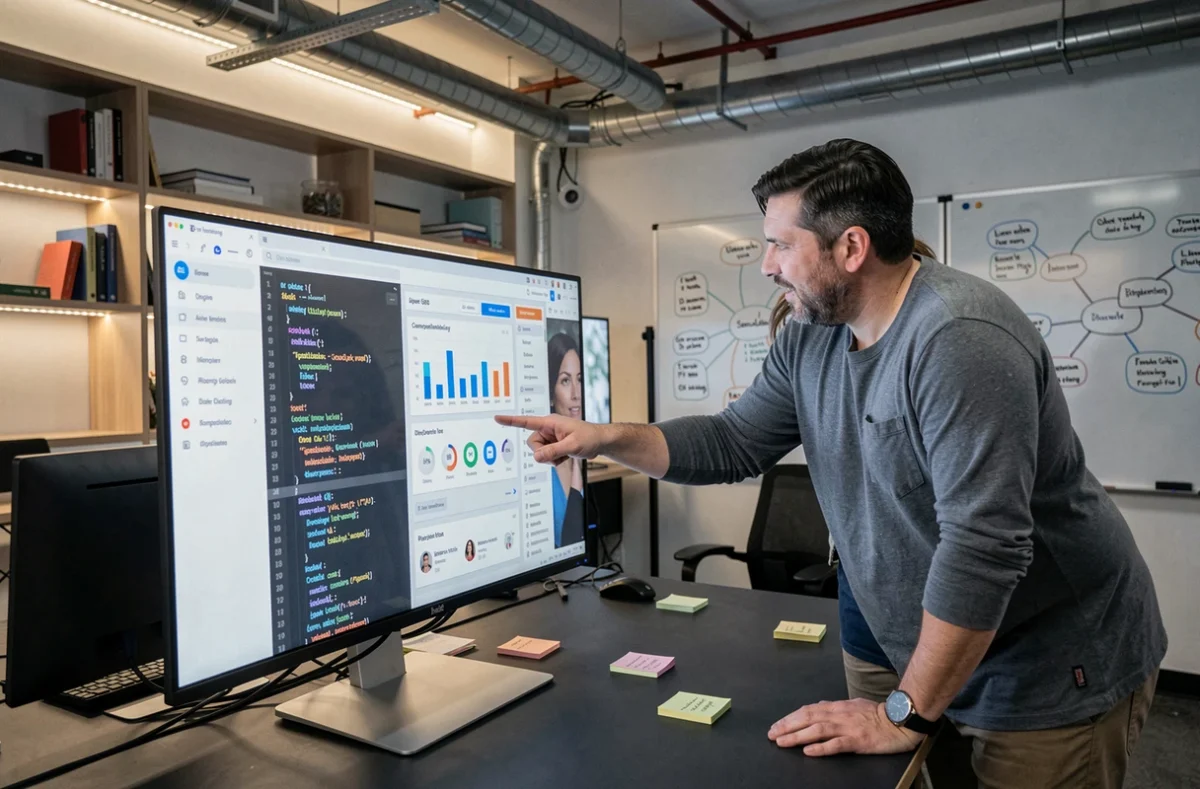
- Assisting front-end development: code suggestions, accessibility error detection, rapid prototyping of interfaces.
Feedback varies on this point. Some teams save significant time on repetitive tasks, while others find that reviewing and correcting AI outputs consumes almost as many resources. AI remains an acceleration tool, not a replacement for human decisions.
Choosing Tools Without Accumulating Subscriptions
The AI applications market is exploding, and the temptation to stack subscriptions is real. Before adding a tool, it’s wise to check what the existing stack already does. Many CMS, CRM, and email platforms now integrate native AI functions. Doubling these capabilities with an external tool means paying twice for the same thing.
The digital trends of 2026 are not tied to a single technology. Regulatory accessibility, visibility in generative engines, and mastery of proprietary data form a triptych that impacts both design and marketing strategy. The teams that move forward are those that test these topics on concrete cases, without waiting for a consensus to emerge.