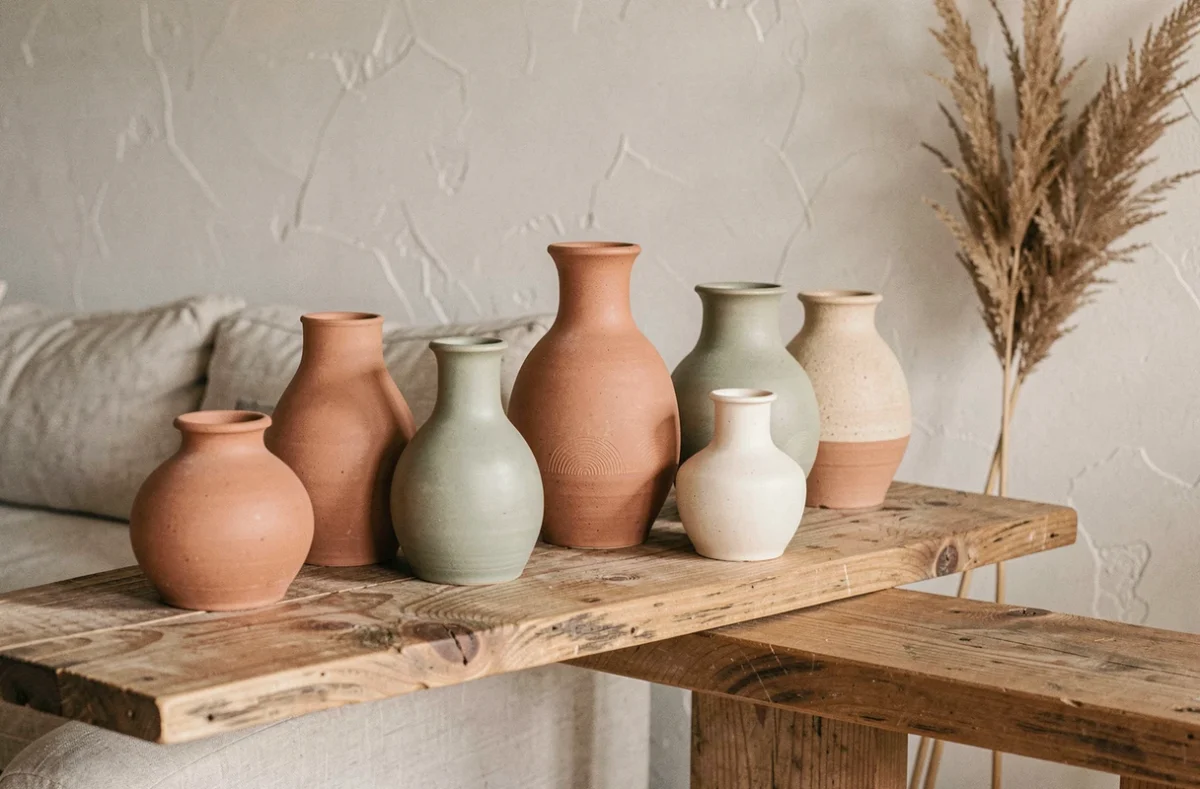
A white wall, a mass-produced piece of furniture, an industrial candle placed on a standard shelf: we all know this living room that looks like a page from a catalog. To break this uniformity, artisanal decor offers a direct connection to material, texture, and craftsmanship. Each handmade piece introduces a deliberate irregularity that adds depth to an interior.
Artisanal wall decor: treating the wall as a living surface
The wall remains the largest free surface in an interior, and it is often neglected in favor of furniture. Hanging a mirror or a frame isn’t always enough to give it character.
A practical approach is to combine wall pieces of different formats and materials on the same wall. For example, a wall weaving in raw wool placed next to a small shelf made of driftwood and a suspended terracotta object. The wall becomes a composition rather than just a support.
Macramé creations or braided plant fibers work well in bright rooms, while carved wooden panels or ceramic masks are better suited for more intimate spaces, like a hallway or an entryway. You can browse decor ideas on Cœur Artisan to find wall creations produced in small batches by French artisans.
One point to keep in mind: the mounting. Artisanal pieces are often heavier than their industrial counterparts. Planning for appropriate anchors based on the type of wall (drywall, stone, brick) avoids unpleasant surprises.
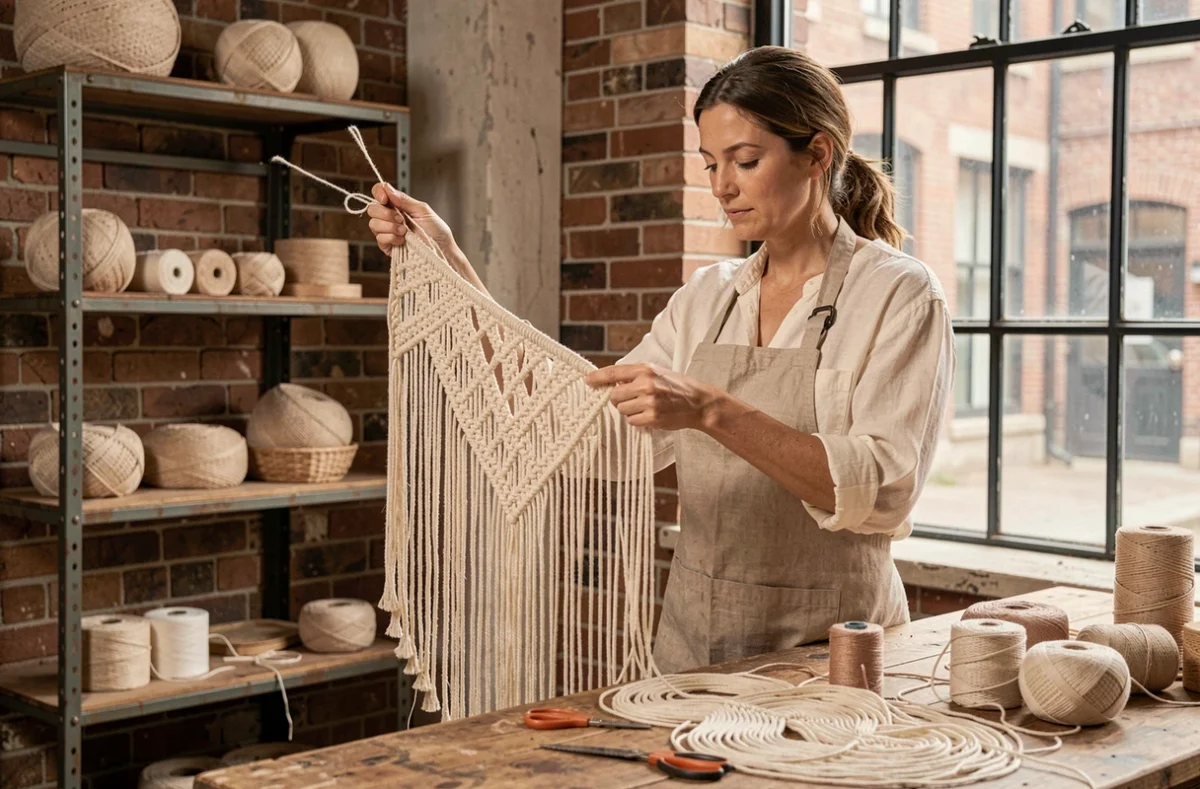
Artisanal ceramics and pottery: beyond the decorative vase
Handmade ceramics are ubiquitous in decor items, but they are too often limited to a vase placed on a console. Their potential goes much further.
Everyday tableware as decor element
Bowls, plates, or mugs in glazed stoneware, arranged on an open kitchen shelf, create an immediate visual effect. Visible artisanal tableware advantageously replaces a painting. The irregularities in glaze and the variations in hue between two pieces of the same series give a natural rhythm to the whole.
Tiles and wall panels
Hand-painted ceramic tiles, placed as a kitchen backsplash or around a bathroom mirror, bring a character that standard tiles do not replicate. There are workshops that create custom pieces tailored to the exact dimensions of the surface to be covered.
Raw wood and recycled objects: giving a second function to materials
Wood remains the most accessible material for introducing craftsmanship into an interior. However, the recent trend goes beyond just solid wood furniture.
Transforming an existing object into a functional decorative piece is a growing approach. An old workshop door, sanded and waxed, becomes a headboard. Assembled wine crates form a wall bookshelf. A tree trunk cut into slices serves as a trivet or decorative platter.
Here are some concrete ideas for integrating artisanal wood:
- An olive wood lazy Susan, crafted on a lathe, placed in the center of a dining table, replaces a classic table runner
- Hand-carved hooks (animal, geometric, or abstract shapes) installed in an entryway serve both as storage and wall decoration
- A reclaimed wood bench, placed at the foot of the bed or under a window, creates an additional seating area that ages well
Opinions vary on surface treatment: some prefer the wood left raw for a more authentic look, while others opt for an oil or matte varnish that makes maintenance easier.
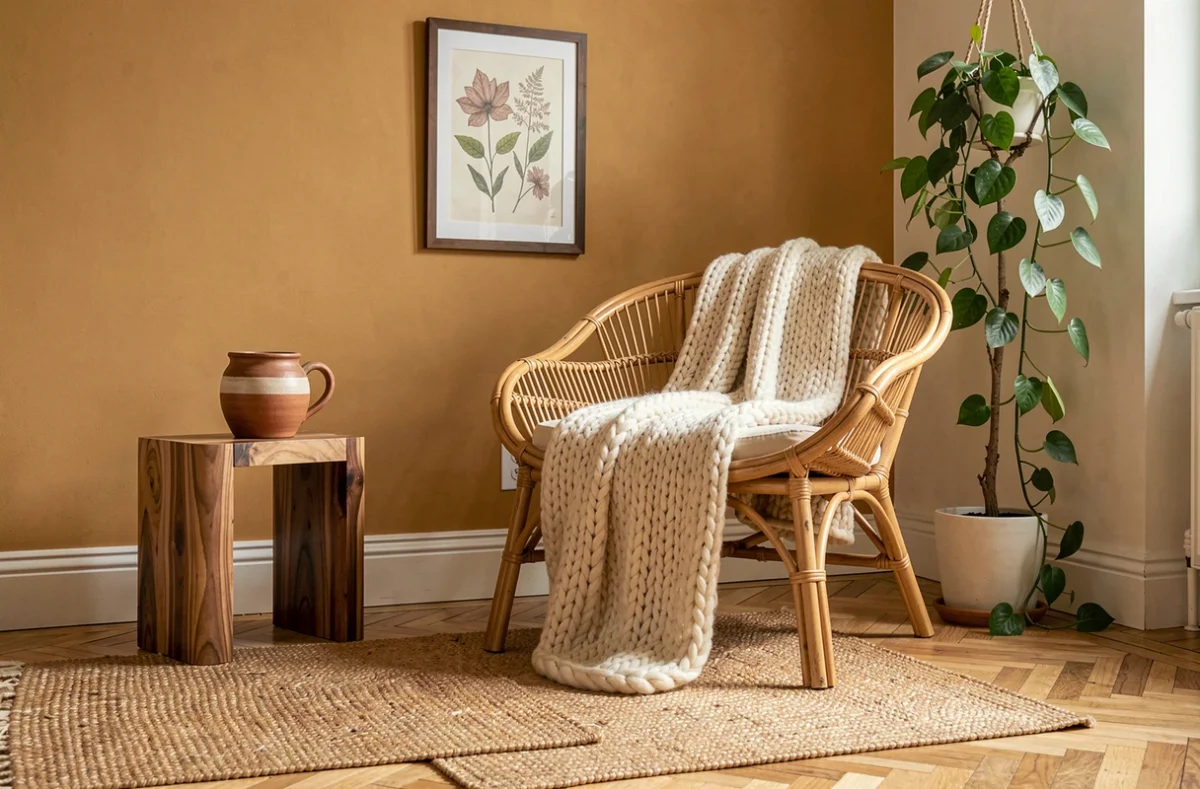
Artisanal textiles: linen, wool, and plant dyes to dress the rooms
A linen cushion dyed with indigo, a hand-knitted merino wool throw, an embroidered cross-stitch tablecloth: artisanal textiles change the atmosphere of a room without renovation. They can be changed with the seasons, renewing the decor at a low cost.
Plant dyes (onion skins, madder, woad) produce subtle shades that no synthetic dye can replicate exactly. They easily match white walls or neutral tones.
For a cohesive effect, artisanal textiles can be grouped by area: cushions and throw on the sofa, tablecloth and napkins on the table, raw linen curtain at the window. Controlled accumulation creates warmth without overcrowding the space.
Eco-design and the “made in France” label: what to check
The AGEC law now requires furniture manufacturers, including artisans, to establish a prevention and eco-design plan. A system developed by UNAMA, Ecomaison, and the FCBA technological institute adapts these requirements to unique pieces and small series, with goals focused on reducing virgin resources and recyclability.
Another point to know: the “made in France” label is based on the last substantial transformation. Cutting, assembling, finishing, or stuffing done in France may suffice, even if some components are imported. There is no obligation to detail the origin of each material.
Here are useful checks before purchasing an artisanal piece:
- Ask if the wood, fabric, or metal comes from an identifiable supplier, and if the artisan can name their source
- Check if the textile finishes contain PFAS treatments, which will be gradually restricted in Europe
- Ensure that claims of “sustainable” or “eco-friendly” are based on measurable criteria (certification, label, technical documentation)
These precautions do not require special expertise. A transparent artisan will answer these questions directly, and this transparency is often the best indicator of quality.
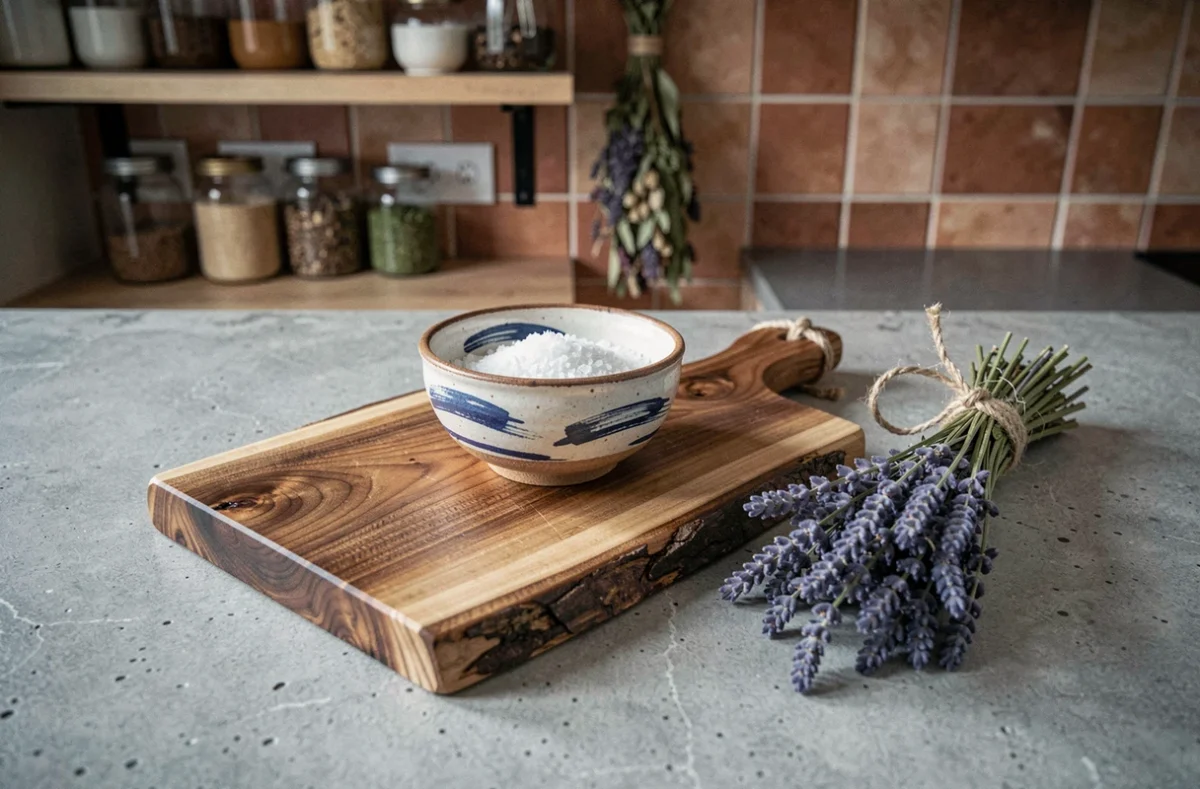
An artisanal interior is not built in a single order. Pieces are accumulated over time, through encounters with creators and materials. This slowness is part of the process: each object finds its place because time was taken to choose it, not because it was in a shopping cart.