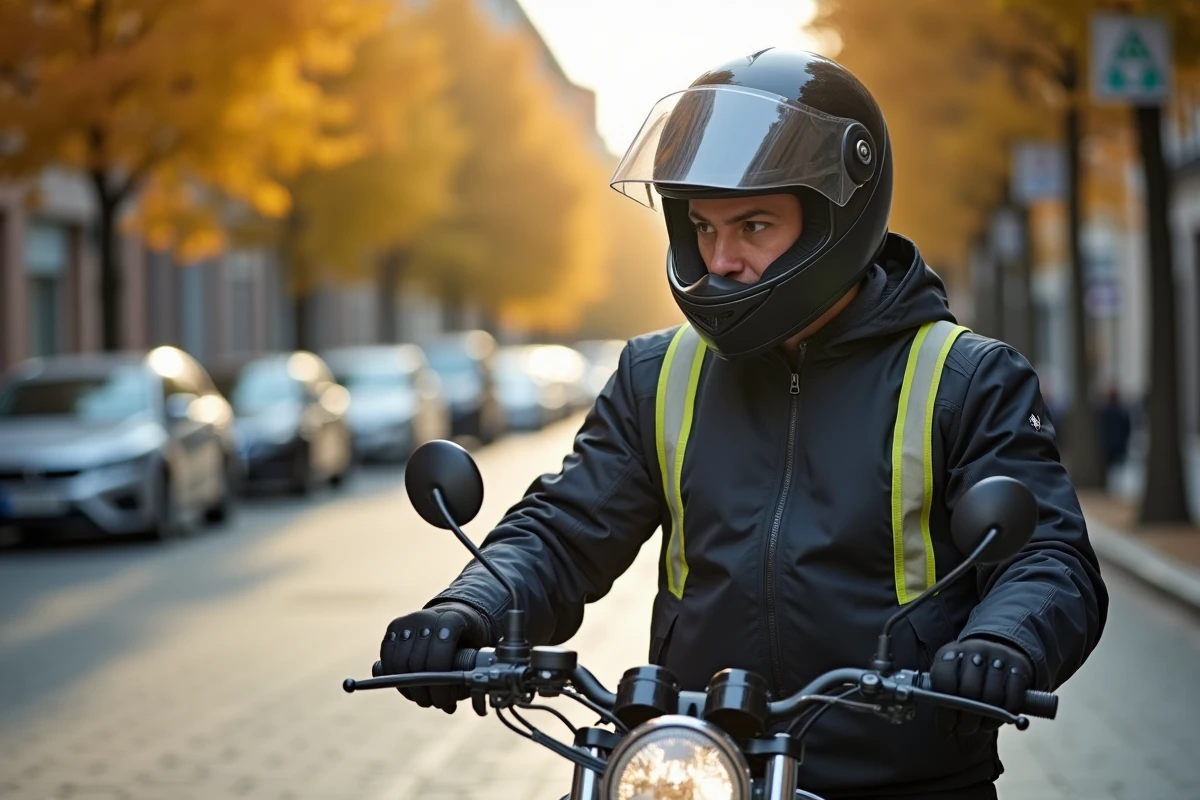
Wearing a balaclava under a motorcycle helmet is not subject to any specific prohibition in the Highway Code. The confusion arises from the law of October 11, 2010, regarding the concealment of the face in public spaces, which does not target motorcyclists but some provisions may apply indirectly during a check.
Balaclava under motorcycle helmet and interaction with the approved helmet
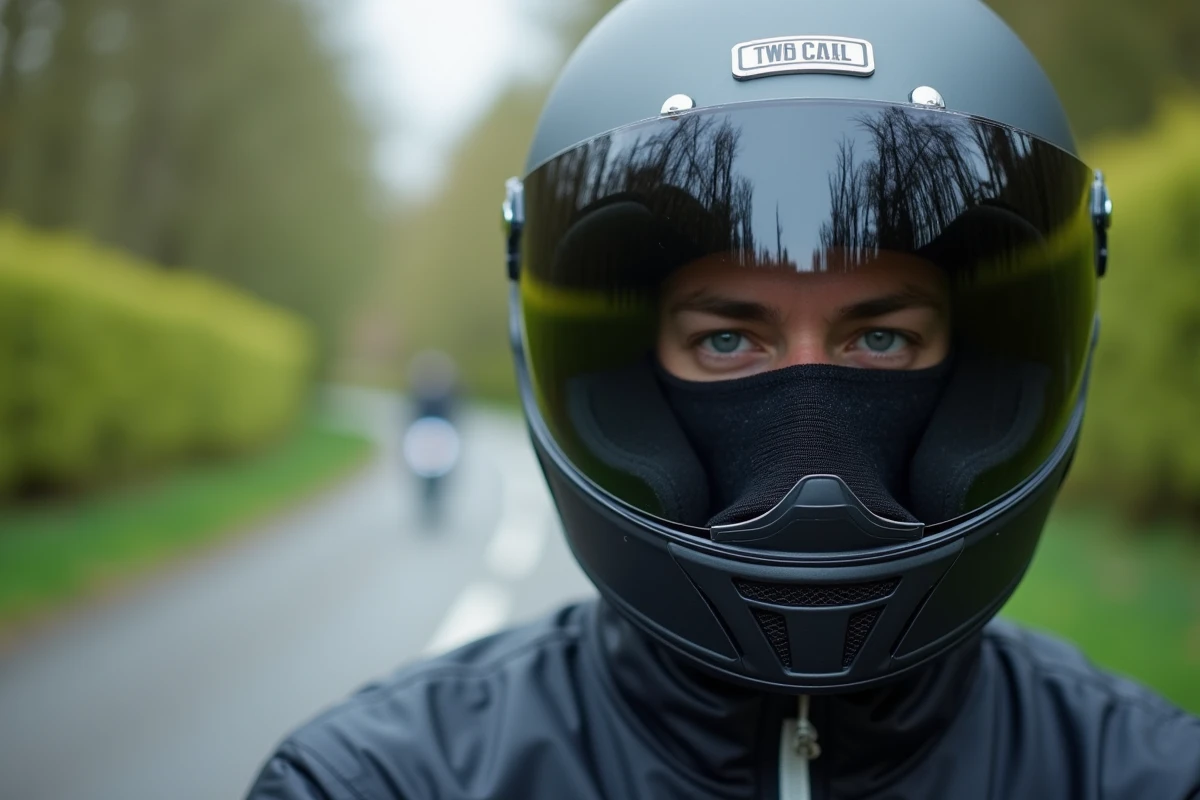
Adding a balaclava between the skull and the internal shell of the helmet alters the positioning of the shell on the head. A fabric that is too thick pushes the helmet upwards, exposes the nape of the neck, and reduces the area of temporal protection. Helmet manufacturers recommend thin and stretchy balaclavas, or even those explicitly approved for their model, in order to not compromise the fit or shock absorption.
We regularly observe motorcyclists who layer a polar neck gaiter and a thick balaclava under a full-face helmet. The helmet appears stable when stationary, but in the event of a fall, the slipping of the fabric between the skull and the internal padding prevents the shell from performing its role. The issue of the prohibited balaclava in motorcycling thus pertains to both passive safety and pure regulation.
To check compatibility, put on the balaclava, place the helmet, and shake your head sideways. If the helmet moves more than a few millimeters or if the chin strap no longer sits under the chin, the fabric is too bulky.
Law on face concealment: what really applies to motorcyclists
The 2010 law prohibits concealing one’s face in public spaces, with exceptions related to health, sports activities, and professional reasons. Riding a motorcycle with a closed helmet is not in itself a violation of this law, since the helmet is mandatory.
The gray area appears when stopped. A parked motorcyclist who keeps a full-face helmet and balaclava in an area covered by a prefectural anti-concealment order (near demonstrations, areas of enhanced security) may be approached and asked to uncover themselves. It is not the balaclava itself that poses a problem, but the combination of face concealment and refusal to uncover at the request of law enforcement.
Prefectural orders and local checks
During gatherings or sensitive events, prefects issue temporary orders that restrict the wearing of accessories concealing the face in a defined area and during specified times. A motorcyclist simply passing through this area may be checked. Removing the helmet and balaclava upon request is sufficient to eliminate any ambiguity.
Public content often omits this dimension: it is not the fabric that triggers the fine, but the refusal to comply with a request for identification.
Fines and penalties: what a balaclava-wearing motorcyclist really risks
Failure to comply with the law on face concealment exposes one to a second-class fine. The offense does not result in a points deduction from the driving license. However, refusing to remove the balaclava at the request of an officer constitutes a separate offense, subject to heavier penalties.
- Wearing a non-approved or poorly fitted helmet due to an unsuitable balaclava: fine up to 750 euros and deduction of three points
- Absence of approved gloves (often forgotten when focusing on the balaclava): fine and deduction of one point
- Failure to have an accessible high-visibility vest: fixed fine without points deduction
The real financial risk does not come from the balaclava itself, but from a helmet rendered non-compliant by overly thick under-equipment.
Insurance and identification of the rider
Some motorcycle insurance contracts mention that the use of equipment not compliant with the Highway Code, or hindering the identification of the insured, may be taken into account when assessing the circumstances of a claim. An automatic denial of coverage remains rare, but the good faith of the insured will be examined if a dispute arises after an accident where the rider was wearing equipment that impaired the helmet’s protection.
Choosing a motorcycle balaclava compatible with safety and law
Thermal protection for the face and neck remains necessary below ten degrees. Choosing the right fabric makes the difference between comfort and danger.
- Prefer a fine, two-way stretch fabric that fits the skull without adding significant thickness under the shell
- Ensure that the facial opening minimally exposes the eyes and nose to avoid obstructing peripheral vision
- Opt for a moisture-wicking fabric that evaporates sweat, to avoid fogging the helmet visor within minutes
- Avoid balaclavas with thick seams on the top of the skull, which create pressure points under the internal padding
We recommend testing the balaclava with the helmet in real conditions (a ride of a few kilometers) before heading out for a long ride. A slight discomfort during the trial can become a serious annoyance after an hour on the road.
The question of the balaclava in motorcycling boils down to two technical points: the helmet must remain properly positioned, and the face must be able to be uncovered upon request during a check. If these two conditions are met, no current text prohibits riding with a balaclava under a full-face helmet.