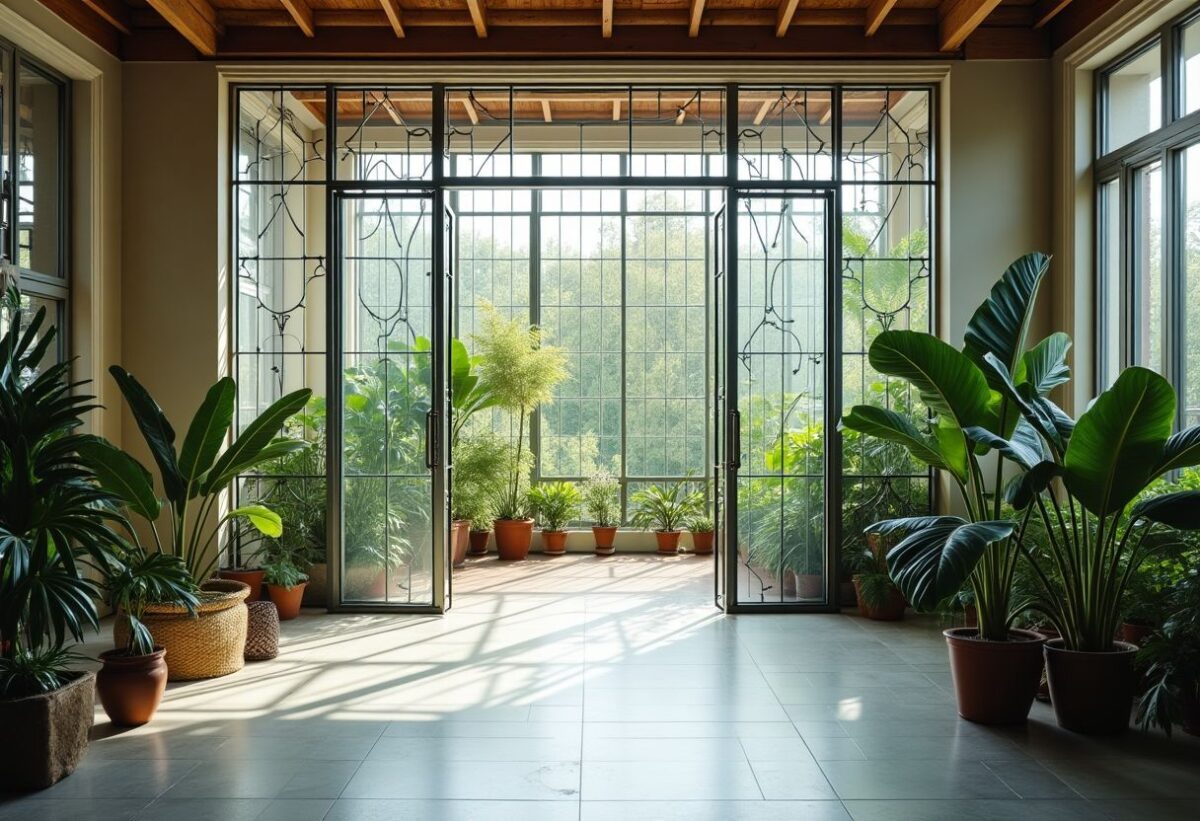
The glass roof, this structure of glass and metal, has become a true pillar of modern architecture and interior decoration. Once reserved for artists’ studios and large greenhouses, it has now become so democratized that it is a must-have in contemporary interiors. Its clean lines and ability to transform light make it a sought-after element for those looking to create bright, open, and refined spaces. The glass roof not only offers aesthetic advantages but also plays a practical role in delineating spaces without partitioning them. It is synonymous with modernity and functionality.
The historical origins of the glass roof
Understanding the current popularity of glass roofs requires a look back at their fascinating history. These structures have a rich and varied origin that deserves exploration.
Historically, glass roofs find their roots in the large greenhouses and industrial workshops of the 19th century. It was in these places that the combination of glass and iron revealed its potential. Initially, they were primarily used to harness natural light for the cultivation of exotic plants or to allow artists to work under optimal conditions. The industrial era expanded their use thanks to technological innovation in the production of glass and metal.
The Art Nouveau movement, in the early 20th century, also played a significant role in the democratization of glass roofs. Architects of this era, such as Hector Guimard and Victor Horta, used glass roofs to embellish Parisian and Brussels buildings, integrating organic patterns and intricate details. Thus, they served not only to illuminate but also to enrich the aesthetics of the space.
The various types of glass roofs
The glass roof comes in several types, each adapted to different needs and styles. Here are some of the most common:
- Workshop glass roof: Inspired by the old artists’ studios, it is characterized by its simple lines and black metal structure.
- Interior glass roof: Perfect for apartments, it allows for the creation of distinct spaces without losing light.
- Roof glass roof: Ideal for maximum natural light, it is often used in lofts or under roofs.
- Haussmannian style glass roof: With curves and elegant details, it adds a classic touch to modern interiors.
Each of these types brings its own ambiance and style to a space, making each installation unique.
The practical advantages of glass roofs
Beyond their undeniably appealing aesthetics, glass roofs provide a multitude of practical advantages in living spaces.
First, they allow for the delineation of spaces while preserving natural light. This feature is particularly appreciated in confined or dark areas. An interior glass roof can transform a cramped space into an open and welcoming place.
Next, they offer light sound insulation, ideal for creating a separation between a kitchen and a living room, for example, without visually cutting off from these spaces. Homeowners can thus enjoy increased privacy without sacrificing conviviality.
Finally, glass roofs are often modular and can be customized to fit the specifics of each interior, whether in terms of dimensions, materials, or finishes. This flexibility makes them a tailor-made solution for all kinds of architectural projects.
Integrating a glass roof into your interior
Adding a glass roof to an interior space is a project that requires thought and planning. Several elements must be considered to ensure a harmonious result.
- Space evaluation: Before installing a glass roof, it is essential to understand the layout of the space and the desired effect.
- Material selection: Metal and glass are the most commonly used, but wooden finishes can also add a warm touch.
- Style and design: Determine whether the glass roof should be a focal point in the room or rather a discreet element.
- Professional installation: Hiring a professional ensures a secure installation that meets standards.
By integrating these aspects, the glass roof can transform a room spectacularly, combining functionality and modern aesthetics.