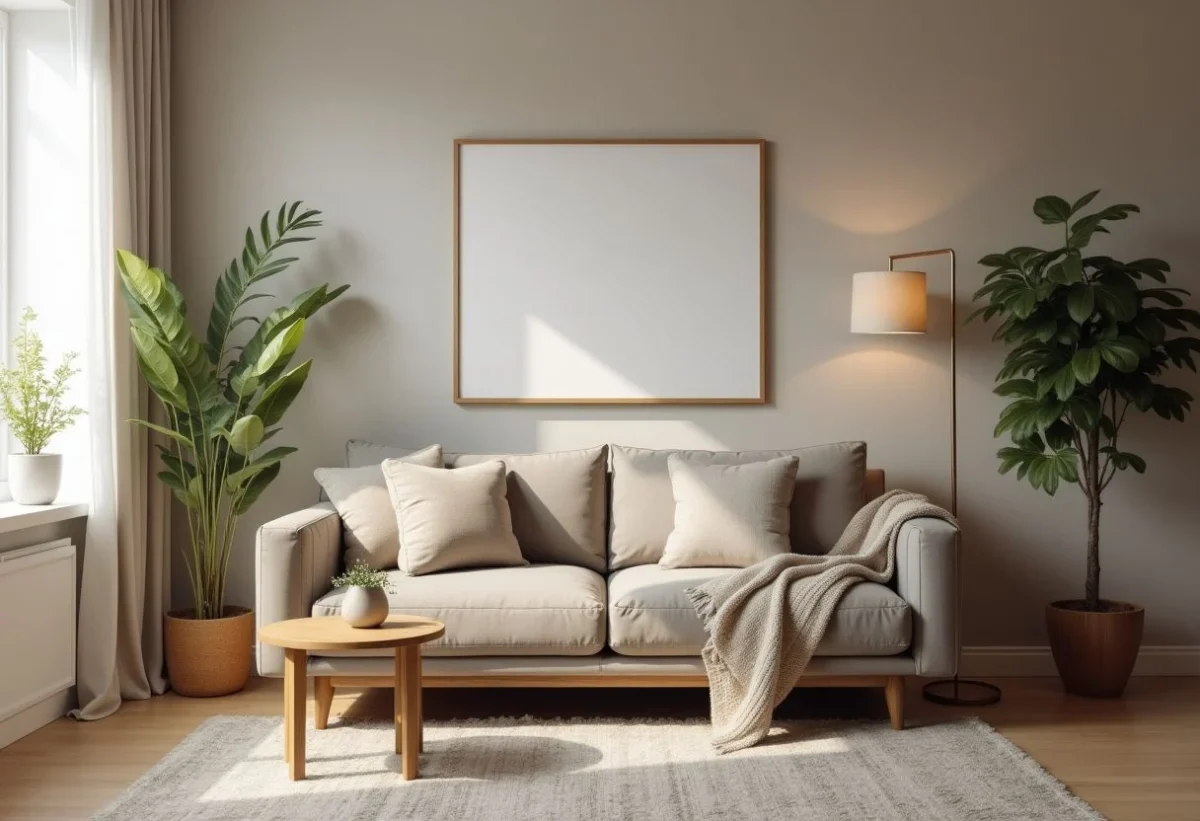
The sofa, the central element of our living rooms, embodies a subtle blend of comfort, style, and functionality. It has transformed over the centuries, evolving from a simple utilitarian piece to a centerpiece that reflects our taste, our lifestyle, and even our personality. As a design object, the sofa offers a blank canvas for creators to express modern and classic aesthetics. But how has such an everyday piece of furniture acquired such importance in our lives?
A rich and varied history
The sofa has not always looked like it does today. Tracing its historical evolution reveals centuries of transformations, influenced by cultural and social changes.
- Ancient origins: The earliest ancestors of the sofa date back to ancient Egypt. At that time, divans and benches were used by royal families and elites, often richly decorated and symbols of social status.
- Evolution in the Middle Ages: In medieval Europe, seating was often made of wood and covered with cushions. The notion of comfort began to gain importance, especially in the homes of the nobility.
- Renaissance and Baroque: During these periods, the sofa evolved into more opulent and ornate forms. Materials became more luxurious, including velvet and brocade, and artisans competed in creativity.
- Modernity and simplicity: In the 20th century, sofa design simplified, reflecting a more streamlined and functional aesthetic, in harmony with the needs of new living spaces.
The dominant materials and styles
The materials and styles chosen for our sofas influence not only the appearance of our living rooms but also the comfort experience they offer.
In terms of upholstery, leather and fabric are the most common choices. Leather embodies luxury and durability, perfect for those seeking a touch of elegance in their interior. Fabric, on the other hand, offers a variety of textures and colors that cater to all tastes and seasons.
Sofa styles are varied: from the classic Chesterfield with its button-tufted design to the modern modular sofa that adapts to contemporary spaces. Linear shapes and streamlined designs dominate minimalist homes, while more rounded and enveloping forms create a warm and welcoming atmosphere. An affordable sofa can also offer a great variety of these styles while respecting consumers’ budgets.
Features and innovations
The modern sofa is no longer just a simple piece of furniture. It now integrates features that enrich our daily lives.
- Convertible sofa: Practical for small spaces, it transforms into a bed in the blink of an eye, providing extra sleeping space during impromptu visits.
- Modular sofa: Ideal for those who enjoy regularly changing the layout of their living room. It consists of several sections that can be arranged according to personal preferences.
- Integrated technology: Some models are equipped with USB ports, wireless charging stations, and even built-in audio systems, making the sofa a true multimedia center.
The sofa as an expression of lifestyle
Beyond its primary function, the sofa expresses a part of our identity and adapts to the most varied lifestyles.
For large families, a spacious corner sofa becomes the nerve center of the home, welcoming everyone during movie nights or lively discussions. Singles or couples without children often prefer more compact yet equally elegant models that fit perfectly into an urban apartment. Finally, contemporary design enthusiasts view their sofa as a work of art, choosing unique pieces that reflect their taste for the avant-garde.