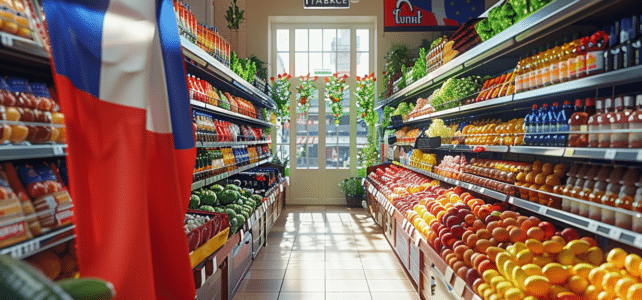
In the world of large retail in France, symbols play a fundamental role in shaping the identity of brands and influencing consumer behavior. From the iconic typography of logos to familiar mascots, and impactful slogans, each visual element is loaded with meaning and designed to communicate a distinctive brand image. These symbols are not mere ornaments; they are the result of in-depth marketing reflection aimed at creating an emotional connection with the customer, standing out in a competitive market, and conveying values such as proximity, quality, or price.
The emblems of French retail: history and evolution
Large retail in France has undergone decades of transformations, where each brand has sought to leave its mark on the commercial landscape. From the first supermarkets to the current omnipresence of e-commerce, the history of this sector reveals a constant adaptation to economic and societal changes. The Covid-19 pandemic, with its undeniable impact, has propelled retail giants into a new era, where local consumption and ethical and responsible consumption are gaining unique momentum. These trends are reflected in the visual symbolism of brands, which renew their image to stay in tune with consumer expectations.
In this dynamic, the Intermarché logo embodies the reinvention of retail symbols. More than just a graphic redesign, the logo change reflects a desire to position the brand in modernity and respond to new customer aspirations. The emphasis on authenticity and ethical commitment is then at the heart of visual communication strategies, inviting a more responsible commerce.
At the same time, the rise of IG products (general indices) allows investors to trade in the retail sector, highlighting its economic importance. Carrefour and Walmart, major players in the sector, illustrate this reality by adapting to the pandemic’s impact through innovative e-commerce offerings and leveraging digital and drive-through as growth vectors. Their presence in financial markets, particularly through stock market investment, demonstrates their significant role in the global economy and their influence on consumption trends.
Impact and strategies of retail leaders in France
The health crisis has disrupted consumption practices, propelling e-commerce to the forefront. Sector leaders, such as Carrefour and Walmart, have had to adapt, transforming their strategies to meet the demands of a rapidly changing market. This adaptation has notably manifested in the establishment of drive services and the strengthening of their digital presence, disruptive elements that redefine the contours of large retail. The Covid-19 pandemic, far from hindering activity, has boosted these innovations, allowing brands to showcase robust performance in an otherwise uncertain context.
The investment of retail giants in digital and drive illustrates their desire to capitalize on new consumer habits. These initiatives, beyond meeting immediate demand, are part of a strategy for customer loyalty and capturing new market segments. Retail leaders are shaping a constantly evolving customer experience, where convenience and efficiency are the watchwords.
The stock market investment of major companies such as Carrefour and Walmart underscores their financial solidity and their ability to influence the sector. These strategic investments not only ensure their growth but also position them as benchmarks within the global economy. These financial maneuvers, well beyond their economic scope, reflect an anticipation of future trends and a commitment to perpetual innovation in a constantly evolving sector.